“On the seashore”
The House of Bernarda AlbaThe expression “On the seashore” gathers María Josefa’s longing for marriage and freedom into a recurring image of elsewhere. She imagines leaving the house for a young husband and a life by the sea; its open, life-giving associations stand against the household’s confinement, mourning, and the village’s dry river-bed. The phrase is both a personal wish and a symbolic counterworld to the restrictive order surrounding the women.
The Escape and Its Repeated Image
María Josefa explains that she has escaped because she wants to marry a handsome man from the seashore, adding that the men in the village flee from women. Her words connect the imagined coast to the absence of eligible companionship at home: the shore is not simply a place but the setting for a different future, where marriage might bring her happiness rather than continued confinement.
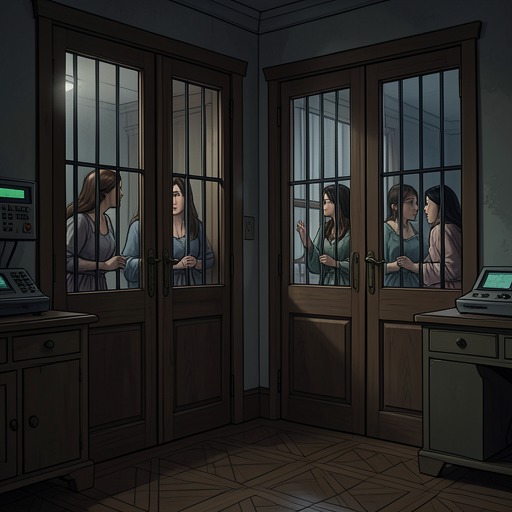
She refuses Bernarda’s command to be quiet and insists that she does not want to watch the unmarried daughters suffer from longing for marriage. She wants to return to her own village and find a husband. When Bernarda orders that she be locked up, María Josefa continues to ask to be let out and repeats her wish to marry by the sea. The scene turns the phrase into an audible refrain: each repetition renews the desire that the household is trying to suppress.
A Counterworld to the House
The play’s imagery gives the seashore a meaning larger than María Josefa’s stated plan. Her dream of marrying a young man there evokes open space and freedom, qualities absent from Bernarda’s house. The contrast is sharpened by the setting’s dry river-bed and the black of mourning that dominates the home. Against these images of restriction and barrenness, the sea suggests water, creativity, and the source of life.
María Josefa’s reference to foam extends the same imaginative contrast. Foam belongs to the sea she longs for, while the house offers no equivalent openness. The shore therefore gathers several related possibilities—movement beyond enclosure, vitality, and a future not governed by the household’s rules—without the play making her escape a reality.
Desire, Gender, and the Household Order
María Josefa’s demand is voiced within a society that assigns women a narrow domestic role. Bernarda represents the traditional expectation that women remain confined to household tasks and subordinate themselves to men; the daughters’ lives are largely shaped by sewing, marriage prospects, and the limits imposed on them. María Josefa’s insistence on leaving and marrying makes that system visible by stating, in her own words, a desire for a life beyond it.
Her speech also places her wish beside the daughters’ frustrated longing for marriage. She names their suffering rather than accepting the silence Bernarda demands, and her repeated request to go out challenges the household’s attempt to contain both her and the subject of women’s desire. The shore thus functions as a counter-image to enforced domesticity, while the scene’s outcome remains confinement: the others drag her away, and the curtain falls as she continues to call for the seashore.